November 10 , 2026, Hong Kong

Wine and Food
From Italy to Asia: What Makes a Wine Sell in Today's Hospitality Industry?
Wine growth is shifting to Asia. Discover what sommeliers want, why education matters, and how producers can succeed in emerging markets
The global wine market is at a crossroads. Sales are declining in the very countries that built the category's modern identity, while economic uncertainty has compressed discretionary spending. For producers and importers accustomed to the market trends of established Western markets, one fact has become increasingly clear: the next chapter of wine's commercial story will not be written in the same places where they started.
For those interested in understanding where the next opportunity lies, Asia is where that chapter begins. And understanding what it actually takes to succeed there requires setting aside almost everything the European wine trade assumes about how wine sells.
A Market Built on Experience, Not Inheritance
Aleksander Draganic, DipWSET, founder of Grape Nomad and The Smallest Wine Fair, spent over sixteen years navigating the wine trade across Europe and Asia. His perspective is grounded in the practical reality of building wine programmes for Michelin-starred restaurants and training sommeliers across the region. His central observation about the Asian consumer is both liberating and demanding: "In Europe, wine is a lifestyle. In Asia, that lifestyle needs to be built from the ground up."
The absence of inherited wine culture, Draganic argues, is not a barrier, but an opening. Asian consumers carry fewer biases toward classic regions and established hierarchies, which means a well-told story about a lesser-known producer or region can land with genuine impact. Education is not optional in this market. It is the culture itself. "Staff training and guest explanation aren't optional. They are the culture," Draganic notes. In practice, this means that the sommelier and the wider service team function as the primary marketing channel for any wine on the list. If the team cannot explain a bottle with confidence and human warmth, it will not sell, regardless of the critic score or the back label copy.
What the Asian On-Trade Actually Rewards
For hospitality operators and buyers navigating wine procurement in markets like Singapore, the commercial criteria are specific and unforgiving. Draganic is direct: "Restaurants don't want interesting wines that sit on the shelf. They want sellable stories, reliable supply, and pricing that allows for flexibility."
The wines gaining most traction with forward-thinking sommeliers across South-East Asia share a common profile: high acidity, lower alcohol, food-compatible structure, and a clear provenance narrative. The shift away from heavy extraction and dominant oak is sommelier-led, driven by the demands of pairing with cuisines layered in umami, fermentation, spice, and complex texture. "Acidity always comes first," Draganic explains, "followed by lower alcohol over heavy extraction, texture over tannin, and natural aromatic lift over oak."
Italy, with its extraordinary breadth of indigenous varieties and its tradition of producing wines built for the table rather than the tasting room, is extraordinarily well-positioned for this moment. The question is which Italian producers are approaching Asia with the right combination of quality, story, and commercial partnership instinct.
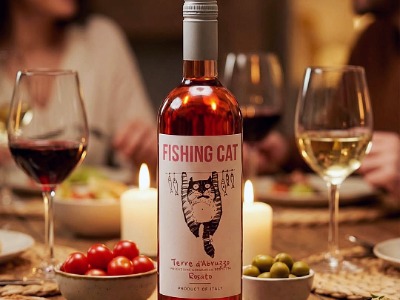
Fishing Cat Wine- Rosato
Where Fishing Cat Enters the Conversation
Fishing Cat Wines was founded in 2017 with a specific and considered mission: to bring the wines of Abruzzo — one of Italy's most distinctive and underappreciated wine regions — to the Indian market, and to do so in a way that builds genuine wine culture rather than simply filling a distribution gap.
Abruzzo's identity is almost perfectly aligned with what discerning Asian sommeliers and hospitality buyers are looking for right now. The region's wines are shaped by a unique microclimate — sun-drenched hillsides cooled by the Adriatic breeze — that produces fruit of natural precision and freshness. These are not wines of excess. They are wines of balance, acidity, and character: exactly the profile Draganic identifies as most commercially viable across South-East Asian fine dining.
Fishing Cat's portfolio spans red, white, rosé, and sparkling expressions from Abruzzo's rolling vineyards, each produced with sustainable farming practices and a commitment to preserving the region's winemaking heritage. The brand's philosophy — that wine is a journey, a celebration of life's moments rather than a performance of status — translates with particular resonance in markets where, as Draganic observes, guests want to feel informed and confident rather than impressed.
Building Trust, Not Just Listings
Draganic's advice to European producers eyeing Asia is unambiguous: stop chasing placements with the largest distributors and start building real relationships. "Show up and visit regularly. Speak like a human, not from a brand manual." The producers who thrive in Asian markets long-term are those who invest in people — in training, in partnership, in the patient work of making staff believe in what they are pouring.
Fishing Cat's model, built around curated selection, direct producer relationships, and a genuine commitment to elevating wine culture one bottle at a time, reflects precisely this approach. In a market that rewards authenticity over scale, and story over prestige, that foundation matters enormously.
The Asian hospitality industry is not looking for another import label. It is looking for a partner that understands the market, respects the consumer, and brings something genuinely worth talking about. Fishing Cat, with Abruzzo's best in the glass and a clear cultural mission behind it, is exactly that.
The 2025 China Competitions results are now live. View 2025 winners.
Key Dates
Early Bird Deadline: July 31, 2026
Regular Deadline: October 14, 2026
Warehouse Deadline: October 22, 2026
Judging Date: November 10, 2026
Winners Announcement: November 24, 2026