November 10 , 2026, Hong Kong

From historic dessert wines to contemporary estates and sparkling wine portfolios, six producers offer Chinese buyers a broader view of a diverse wine category.
Russian wine offers a story of continuity and experimentation. Established producers preserve long-standing styles, while contemporary estates explore vineyard identity, unusual blends and modern approaches to production. For buyers discovering the category, this diversity provides a useful starting point.
Cabernet Sauvignon, Chardonnay and Riesling offer familiar reference points. Krasnostop, Kokur and other less widely encountered grapes open further avenues for discovery. Meanwhile, the range extends beyond dry reds and whites to sparkling, late-harvest and fortified wines.
Six producers—Kuban-Vino, Mezyb Estate Winery, Krinitsa, Derbent Vino, Massandra and Alma Valley—illustrate different parts of this evolution. The selection includes Massandra and Alma Valley, both located in Crimea.
Kuban-Vino: Established Traditions, a Varied Portfolio
Founded in 1956, Kuban-Vino connects an established production history with a contemporary portfolio. The producer describes an approach combining traditional winemaking methods with modern European technology.
Its Chateau Tamagne and Aristov labels provide several routes into the category. The supplied selection includes Chateau Tamagne Volcans du Sud Chardonnay 2024, Volcans du Sud Saperavi 2024 and Chateau Tamagne Reserve Saperavi 2019. Aristov Donum 24, a 2023 white sparkling wine, combines Chardonnay, Riesling, and Pinot Blanc.
For buyers, that breadth creates an opportunity to explore one producer across different styles and price positions. A comparative tasting of its varietal whites, Saperavi wines, and sparkling blend would help establish where each label might fit in a retail or hospitality portfolio.
Mezyb Estate Winery: Experimentation Through Blending
Mezyb Estate Winery offers an interesting perspective on blending. Its supplied portfolio places familiar international grapes alongside Krasnostop and Saperavi, with combinations that invite a closer conversation about winemaking choices.
Estate Mezyb Krasnostop/Saperavi 2023 combines Krasnostop and Saperavi with smaller proportions of Viognier and Cabernet Sauvignon. Two Banks of the Same River Reserve 2019 is predominantly Merlot, supported by Malbec, Chardonnay and Viognier.
Alongside these blends, Estate Mezyb Viognier 2025 and Pine Cone Sauvignon Blanc 2025 provide more familiar single-variety introductions.
For Chinese buyers, the appeal is the opportunity to explore both accessibility and difference within one range. The varietal whites offer recognisable starting points, while the blends give the producer a distinctive story to explain through tasting.
Krinitsa: Vineyard Identity and Modern Winemaking
Krinitsa represents an estate-focused approach. Located near Gelendzhik along the Pshada River, the winery describes a vineyard environment shaped by the Black Sea, hills, forests, and varied soils. Its production approach includes manual harvesting, careful selection, and gravity-based handling.
Its wines offer several expressions of that identity. Rivage 2022 blends Cabernet Sauvignon, Cabernet Franc, and Syrah, while Colline 2022 combines Syrah, Marselan, and Mourvèdre. Riesling 2024 and Aroma 2024, a sweet Petit Manseng wine, extend the range beyond red blends.
These wines give buyers a way to explore one estate across contrasting varieties and styles. They also provide a starting point for questions about vineyard parcels, blend development, and how the producer intends to position its wines.
Derbent Vino: A Contemporary Voice from Dagestan
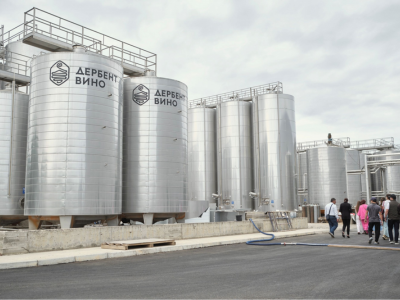
Derbent Vino broadens the geographical picture with wines from Dagestan. The producer describes a modern operation with its own vineyards and European equipment, and states an ambition to establish Derbent as the centre of a new wine region.
The supplied range includes Di Caspico Blanc de Blancs, a Chardonnay-based brut sparkling wine; Endemi Bianca, a brut white sparkling wine; and Endemi Chardonnay. Its Caucasian range adds semi-sweet red sparkling and still wines.
This variety demonstrates why the category deserves exploration across more than one style. Buyers can evaluate sparkling and still wines, different grape compositions and contrasting sweetness levels, then assess their suitability for particular customers and occasions.
Massandra: Preserving the Dessert-Wine Tradition
Massandra brings the historical dimension into focus. Founded in 1894, the winery provides a connection to a long-established winemaking tradition in Crimea.
Its supplied portfolio includes Kokur Desertniy Surozh 2020, a fortified white wine made from Kokur; Cherniy Doctor 2022, a fortified red dessert wine blending Kefisia and Ekim Kara; and Bastardo 2022, made from Bastardo Magarachsky. Late-harvest white and rosé Muscat wines sit alongside a dry Cabernet Sauvignon.
For buyers, these wines offer an opportunity to discover both less familiar grapes and established sweet-wine styles. They could provide the basis for specialist tastings and dessert-menu pairing trials, with suitability determined through tasting rather than assumptions about the category.
Alma Valley: Exploring Dry and Sweet Expressions
Alma Valley offers a complementary perspective through a portfolio spanning dry reds, semi-dry whites and sweet wines. Its official website also highlights naturally sweet wine styles as part of its offering.
The supplied selection includes Shiraz Reserve 2021 and Alma Reserve 2021, a blend of Cabernet Sauvignon, Merlot and Shiraz. Riesling 2025 adds a semi-dry white expression, while Semillon Appassimento 2022 and Pinot Noir TBA 2024 show the producer’s exploration of sweet wines through different varieties.
That range invites buyers to assess each style for a separate commercial role. A dry red, a semi-dry Riesling and a concentrated sweet wine will require different positioning, service occasions and customer explanations.
New Ambitions and the Chinese Buyer
Together, these portfolios illustrate several directions: preserving established styles, giving vineyard origin a stronger voice, experimenting with blends and introducing a wider range of wines to new audiences.
For Chinese importers, distributors and sommeliers, international varieties provide familiar benchmarks. Less familiar grapes and distinctive styles offer potential points of difference. Turning that discovery into a purchasing decision requires tasting supported by clear pricing, technical information, supply consistency and an understandable producer story.
The evolution of Russian wine can be explored bottle by bottle—through the traditions producers retain, the choices they make in the vineyard and winery, and the audiences they hope to reach.
Also Read:
What Makes a Wine Succeed in China’s On-Trade? Insights from the 2025 Judging Panel
What International Wine Brands Still Get Wrong About China
China Wine Competition Introduces an Exclusive On-Trade Buyer Intelligence Report for Entrants
The 2025 China Competitions results are now live. View 2025 winners.
Key Dates
Early Bird Deadline: July 31, 2026
Regular Deadline: October 14, 2026
Warehouse Deadline: October 22, 2026
Judging Date: November 10, 2026
Winners Announcement: November 24, 2026