November 10 , 2026, Hong Kong

From the first pour to long-term growth, Julien Pourtier explores what it takes to turn an imported wine into a trusted name in China.
Julien Pourtier is a seasoned global wine executive whose career reflects a deep understanding of how fine-wine brands are built, positioned and sustained across Asia-Pacific. His journey began in China, where conducting tastings and engaging directly with consumers introduced him to one of the world’s most dynamic wine markets. Over the years, he developed expertise in commercial strategy, distribution, brand development, and market education, including senior responsibilities at Jackson Family Wines and the regional growth of the prestigious Chilean estates Seña and Viñedo Chadwick. He is also the co-founder of The Asia Team, a platform dedicated to supporting wine education and market development across the region. Born and raised in France, Pourtier combines an appreciation for terroir-driven wines with a commercially focused understanding of Asia’s diverse cultures and routes to market. In this feature, he discusses the evolution of Chinese wine consumption, the realities of premium-brand development, the influence of sommeliers and importers, and what international producers must understand to build relevance in China.
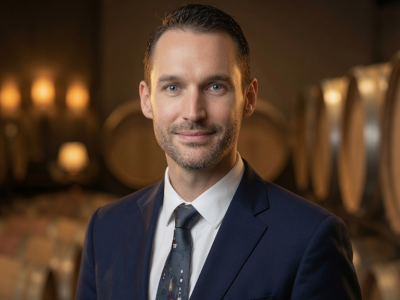
Source: Julien Pourtier
Could you begin by sharing how your wine journey started in China, how working across Asia-Pacific has shaped your understanding of the region's wine business, and what led you to found The Asia Team?
Let me try to sum up two decades — half my life — briefly!
I came to China for the first time in May 2006, for an internship, and fell in love with two things at once: wine and China. That may sound strange for a Frenchman, but I felt I was in the right place at the right time. I went back to Europe to finish my double master's between business school in Dijon and Vienna, where I wrote my entire thesis in German on building a wine import business in China. I also spent a summer working in Burgundy, because I wanted to understand vineyard management and production from the inside rather than from a classroom.
Then I came back. I started on the importer side in Shanghai, developing the on-trade, before moving to winery representation in Greater China, first for a Burgundy producer, then a Bordeaux négociant, then producers from the South of France. I joined Jackson Family Wines for almost three years covering China and several South-East Asian markets, and then spent a decade at Seña and Viñedo Chadwick, developing Chilean fine wines across the whole of Asia-Pacific.
Working across the region taught me the single most useful lesson of my career: "Asia" does not exist as a market. Japan, Korea, Vietnam, Australia and mainland China have almost nothing in common in terms of buying culture, timing, or what a partnership even means. What works brilliantly in one can fail completely in the next.
Earlier this year I decided to partner with a former colleague, Sabrina Tumino, and offer that experience to family-owned estates making excellent wine but without the financial or commercial capacity to develop Asia-Pacific properly on their own. Great wines and, more importantly, great people that we can connect to the 350-plus importer network we have built over two decades.
Having worked in the Chinese wine market for many years, what have been the most significant changes in consumer behaviour, distribution and fine-wine appreciation?
The Chinese wine market is fascinating precisely because it never stops moving. What worked twenty years ago may not work today, and sometimes the opposite is true, and something that failed a decade ago suddenly makes perfect sense.
On consumption: wine used to be almost exclusively red. Today demand for white and sparkling is growing steadily, and that is a genuine structural change, not a fashion. Wine has also moved from being primarily a gifting and business-banquet product to something people actually open for themselves, with friends, at home or in a restaurant. That is a much healthier foundation.
On distribution: the market has professionalised enormously. Twenty years ago almost anyone could import a container and find a way to sell it. Today importers are far more specialised, some focused on Burgundy, some on natural wine, some on a single country, and they are far better at what they do. That means more competition, but it also means a producer can find a partner who genuinely understands their style rather than treating the wine as a line item.
On appreciation: this is where the change is most striking. There is now a real community of sommeliers, wine directors, educators and serious collectors in China, many of them extremely well travelled and well tasted. The level of conversation you have in a Shanghai or Chengdu restaurant today is completely different from fifteen years ago. Volumes have gone up and down over the years; the past few have been demanding for everyone, but the depth of knowledge has only ever gone in one direction.
After ten years leading Seña and Viñedo Chadwick across Asia-Pacific, you co-founded The Asia Team, which acts as an outsourced APAC export office for family-owned European estates. What does that role involve day to day, and which markets currently require the most distinctive strategies?
Day to day, it is not so different from what I did before: reaching out to importers across the region, visiting markets, opening bottles, following up, and doing that consistently for months before anything happens.
Where it genuinely differs is the model. At Seña and Viñedo Chadwick, the wines were sold through the Bordeaux négociant system, an open-market distribution with real advantages, since any importer can buy, and real drawbacks, since it is difficult to build long-term partnerships when a smaller importer is undercutting the one who has invested in building the brand. Today I am looking for exclusive, long-term partnerships. That changes everything about how you select a partner: you are not looking for whoever will take the first pallet; you are looking for someone who will still be working on the wine in five years.
As for markets, each one requires its own approach. Japan is mature, sophisticated and relationship-driven; decisions take time, importers ask precise questions, and once the trust is there it lasts. Vietnam is at the opposite end: developing fast, changing shape every year, and rewarding whoever is present early. There is no single Asia-Pacific strategy, and anyone who tells you otherwise has not spent enough time on planes.
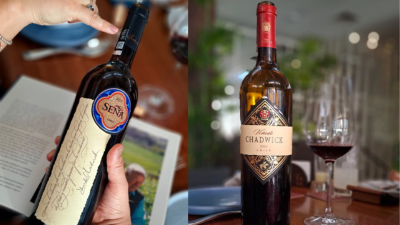
Source: Diario Correo
Chinese consumers have traditionally associated prestige wine with a handful of established European regions. Whether it's Chile, Sicily, Tuscan Maremma or a Bordeaux satellite appellation like Fronsac, how can less-familiar origins earn comparable recognition and trust?
Every wine market starts the same way: people buy either the most famous wines, if they have the money, or the cheapest, if they don't. But the common point is that they are interested. And once someone is genuinely interested, they keep learning, they move between those two extremes, and they discover diversity.
Wine, like food, is about diversity. Chinese consumers are among the most sophisticated in the world when it comes to taste; the food culture is extraordinarily rich and regional, so they are naturally open-minded about wine too. They love hearing the story, and above all they love tasting.
For a less familiar origin, that gives you the route in. You cannot buy your way to recognition, but you can earn it: be consistent in quality, be honest and credible about your pricing, show up regularly rather than once every three years, and put the wine in the glass of the people whose opinion travels among sommeliers, educators, serious collectors. Trust in this market is built slowly and person by person. The good news is that once you have it, it is remarkably durable.
You spent a decade introducing Chilean icon wines to Asia and are now developing estates such as Ampeleia, Alessandro di Camporeale and Château Les Trois Croix. What has that taught you about bringing unfamiliar regions, terroirs and grape varieties to Asian consumers and what carries over from one to the next?
Before Chile, I was also introducing Californian wines to China, Myanmar, Thailand and Vietnam! I suppose that is the thread of my whole career. I love introducing estates and regions that people don't know yet. It is also my approach to life: stay curious, travel, discover, meet different people, eat different food, and share a bit of history and culture along the way. What carries over from one to the next is more than I expected.
First, the region never sells itself. A grape variety no one has heard of is not a marketing problem to be solved with a brochure; it is simply a reason to get the bottle open in front of the right person.
Second, find the right partner rather than the biggest one. An importer who is genuinely excited about your wine and sells two hundred cases will do more for you over five years than a large one who takes a thousand and forgets about it.
Third, the story has to be true, and it has to be simple. People remember one clear idea, not a page of technical detail.
Fourth, price positioning has to be credible from day one. A new origin cannot ask Bordeaux prices immediately, but pricing too low is worse; you can raise a reputation far more easily than you can raise a price.
And fifth, patience. Three to five years before a market really takes hold is normal. Every single time I have tried to shortcut that, it has cost me more time than it saved.
Source: Julien Pourtier
How important are restaurants, hotels and sommeliers in shaping the reputation of a fine-wine brand in China?
They are essential, as are wine critics and the press. Unfortunately, it is now an expensive and time-consuming exercise, but it still works, because these are the people whose opinion travels furthest and fastest. The sommelier community in China is small, tightly connected and highly professional. A wine director who genuinely believes in a wine will do more for it in a year than any advertising campaign.
But that is only one part of the equation. The wine also has to be available. There is nothing more frustrating than building interest in a restaurant and then having no one able to supply it, or the reverse, listing a wine everywhere and never having anyone taste it properly. Wine needs to be drunk and enjoyed in the end. Prestige without availability is just a rumour.
Beyond critic scores and global recognition, what ultimately convinces a Chinese importer, sommelier or wine director to support a premium wine?
The taste, of course. But taste is subjective, and it varies by country, generation, cuisine, even climate. I always compare wine to people: like people, a wine cannot please everyone. The challenge is matching the right wine with the right importer.
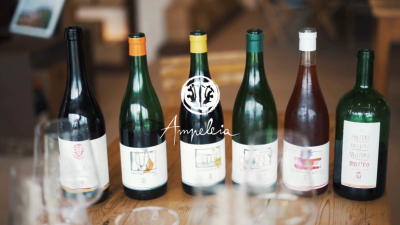
Ampeleia is a good example. It is farmed biodynamically with Mediterranean varieties and made with minimal intervention, so it sits comfortably in the natural wine conversation. I approached importers specialised in that niche, and in several markets it clicked immediately.
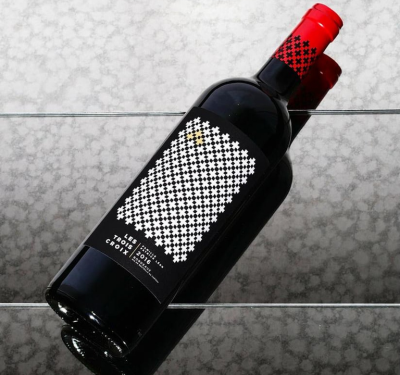
Château Les Trois Croix is a different story entirely. Bertrand Léon runs the estate; his father, Patrick Léon, was technical director at Château Mouton Rothschild for more than twenty years. That kind of family pedigree speaks powerfully to importers who specialise in fine wine and who love heritage and lineage.
Alessandro di Camporeale is a third case. They farm in western Sicily around Camporeale and also have a project on Etna, in the east. Being able to offer a single-family estate spanning both ends of the island is unique, and that is precisely what appealed to importers looking for a single Sicilian producer who can represent the whole island rather than three separate suppliers.
Beyond the wine itself, importers are ultimately betting on people. They want to know that you will answer the phone, be transparent about allocations and pricing, and still be there next year. In this region, that reliability is worth more than any score.
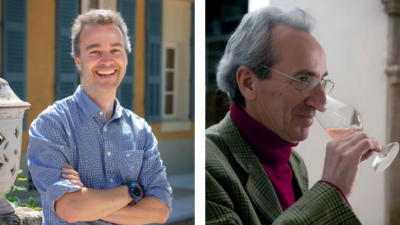
Image: From Left - Bertrand Leon and Patrick Leon. Source: Sommeliers Choice Awards
How do preferences differ between established fine-wine drinkers and the younger generation of Chinese consumers now discovering wine?
I don't really like stereotypes, but if you ask me to generalise: established, older fine-wine drinkers in China remain more focused on the classics, especially Bordeaux, Burgundy and some Champagne. They know what they like, and they are loyal to it.
The younger generation is remarkably open-minded. The same person will taste an orange wine from Ningxia, an indigenous Sicilian variety, a New Zealand Sauvignon Blanc, a German Riesling and then order a glass of Romanée-Conti by the glass, because they may not want to spend on the whole bottle but they are curious enough to want to make up their own mind about what a great classic actually tastes like.
That last point is the important one. They are not rejecting the classics; they simply refuse to take anyone's word for it. They discover through social media and through friends rather than through scores; they are less brand-loyal, and they are far more interested in the experience around the bottle than in the label on it. For a producer, that is good news; it means the door is genuinely open, but it also means you have to earn the place in the glass every time.
With consumers becoming more selective about spending, how should fine-wine brands communicate value without weakening their premium positioning?
That is a very good question, and I wish I had a definitive answer. I have spent thousands of hours on it, and I have arrived at what the French would call a semblant de réponse “the beginning of an answer,” which is simply to go back to basics: open bottles, tell the story, let people experience the wine.
Wine is about experience, and it never tastes the same twice: the glass, the temperature, your mood, and above all the place, the setting and the company. Organising tastings and dinners remains, to me, the most efficient way for a fine-wine brand to hold its position, because you are not discounting; you are demonstrating. Value is not the same thing as price.
I am old enough to remember when some very famous estates organised no dinners and no tastings at all. I thought it was insane, but the fame was working, so why bother, I suppose. Most of them have realised since then that arrogance never worked, and I can say that as a Frenchman. Being authentic is what lets people enjoy wine.
I would add one thing. As the world becomes more automated and more AI-driven, I believe human experiences will be in higher and higher demand. Fine-wine brands that create genuinely great experiences- a real dinner, a real conversation, a real person pouring the wine will be rewarded for it.
Source: Ampeleia
Ampeleia farms biodynamically in Maremma and works largely with Mediterranean varieties rather than the international ones Asian buyers know best. How important are authenticity and sustainability when communicating with today's Asian fine-wine audience, and do they genuinely move a buying decision?
Again, there is a market in Asia for every wine; the challenge is finding the right importer. Some prefer to stick to the classics for each region; others are actively looking for something different.
Authenticity matters enormously, because authenticity comes with a story. And who doesn't enjoy telling a story to a friend while filling their glass? That is really what it does: it gives the sommelier, the importer, and ultimately the consumer something to say.
Sustainability is also growing in Asia, particularly in China, where organic agricultural products are now widely available and increasingly expected in the premium segment.
To answer the second half honestly: they open doors rather than close sales. Biodynamic certification will get you the meeting with the right importer and the attention of a sommelier who cares about it, and with certain buyers it is genuinely decisive. But for most consumers it is not the reason they buy the second bottle. It is the reason they listened to the story of the first one. The wine still has to be delicious.
Looking ahead, which wine origins, varieties or styles do you believe remain underestimated but have strong potential within China's evolving on-trade market?
Wine lists in China have become genuinely serious in a lot of establishments, and I would be careful about predicting trends. As an example: everyone agreed that white wine would boom in China, and it seemed obvious; restaurant lists were already 30 to 40% white while actual consumption was still overwhelmingly red. But it took a very long time, and it is really only happening now. I cannot remember visiting a restaurant in the past three years and finding the huge gaps in the wine list that used to be normal.
That said, a few things do look underestimated to me.
Italy beyond Tuscany and Piedmont, Sicily in particular. The island offers extraordinary diversity, from the volcanic wines of Etna to the indigenous varieties of the west, at prices that still make sense. It has the freshness, the food affinity and the story that the on-trade is looking for.
The Bordeaux satellites. Appellations like Fronsac deliver serious, ageworthy wine with real pedigree at a fraction of the price of the famous names. As buyers become more selective, that gap becomes harder to ignore. Whites and sparkling wines with real character, rather than as an afterthought. This is finally happening, and I don't think it has run anywhere near its course.

Source: The Asia Team
More and more family-owned estates are reaching Asia without building an in-house export team. Why does that model work now, and what does it change for importers on the ground?
This is exactly why we launched The Asia Team with my business partner Sabrina Tumino. The idea is simple: efficiency and cost-effectiveness for everyone.
For a family estate, building an Asia-Pacific presence internally means hiring someone, funding their travel across fifteen markets, and waiting two or three years to find out whether it worked. Very few family-owned producers can justify that, however good their wine is. Working with us, they get immediate access to a network built over two decades and people who are already on the ground and already know the markets at a fraction of the cost and the risk.
For importers, the change is just as significant. They have worked with us in the past, so the trust already exists. They know we will be transparent, that we will answer, and that we will deliver what we promised. They deal with someone in their time zone who understands their market rather than an email address in Europe.
To put it simply: a friend of a friend is usually a friend.
Header image source: Julien Pourtier
Also Read:
From Bordeaux To Hong Kong: Dominique Noël’s Unfiltered View On Wine Buying
What Sells Wine In Hong Kong? Kevin Suen Shares A Ground-Level View
Iain Langridge on How In2Asia Helps Alcohol Brands Thrive in China’s Booming Alcohol Market
The 2025 China Competitions results are now live. View 2025 winners.
Key Dates
Early Bird Deadline: July 31, 2026
Regular Deadline: October 14, 2026
Warehouse Deadline: October 22, 2026
Judging Date: November 10, 2026
Winners Announcement: November 24, 2026