November 10 , 2026, Hong Kong

Dominique Noël shares decades of expertise on wine selection, pricing, drinkability, and changing consumer preferences across global markets.
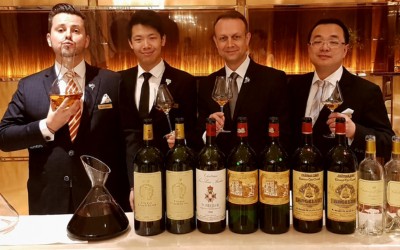
Dominique Noël is a seasoned private and corporate Sommelier and Wine Buyer with more than three decades of international experience in the wine industry. Based in Hong Kong, he works directly for the Owner and CEO of several companies, managing the sourcing, negotiation, purchasing, and service of wines and beverages for private dinners, corporate events, and exclusive gatherings. Specializing primarily in French wines, he carefully curates selections tailored to both private consumption and high-level entertaining. Over the course of his career, Dominique has worked across three continents in some of the world’s leading wine capitals, including Bordeaux, Paris, London, New York, and Hong Kong. His experience spans luxury restaurants, specialized wine and spirits boutiques, and the wine division of a major corporate group, where he held senior management and wine buying roles.
Beyond purchasing and portfolio management, his expertise includes wine quality control, market analysis, wine education, event organization, wine writing, and oenotourism. A certified wine professional with a strong voice in the industry, Dominique is known for combining deep technical knowledge with a genuine passion for wine, gastronomy, culture, the arts, and global travel. In this exclusive feature, Dominique shares insights from his remarkable career and his perspective on building successful wine programs in today’s evolving market.

Source: Dominique Noël
How do you approach building and managing a portfolio that performs well within your wine program?
My approach as a Sommelier to building and managing a portfolio that performs well is mostly based on the wine’s immediate drinkability, its “Wow!” factor, and, of course, its price. It was also my approach when I worked in restaurants: buying good to top wines that are underrated, unknown, limited, recognizable, or famous, at reasonable prices, from trusted sources, in good vintages, with good or high scores when possible, and most importantly, wines that are ready to drink or within their ideal drinking window. During dinners and events, just like in restaurants, guests do not have time to listen to long explanations about why a wine is good. They want to taste it. They want the experience. They want to trust your palate and not be disappointed. If you explain sincerely, in just a few sentences, why you selected the wine, people are usually convinced immediately. But if you argue for too long, you risk losing both the sale and their trust.
That is why I have difficulty understanding Sommeliers who offer off-vintages or vintages that are far too young to drink at sky-high prices, such as Bordeaux 2011, 2013, 2014, 2017, or 2021. I have seen this in many restaurants. I have never done that in my 34-year career. Life is too short to drink bad or mediocre wines. A strong restaurant portfolio should offer diversity across appellations, regions, countries, and price ranges, focusing on good vintages that are ready to drink and fairly priced. In retail, the approach is similar, except you may include younger vintages that are not yet fully ready, along with a few off-vintages that allow customers to access top wines at more affordable prices.
How would you define your buying philosophy when balancing quality, price, and commercial viability?
As mentioned above, my philosophy is to buy good to top wines, underrated, unknown, or limited, as well as recognizable or famous brands, at reasonable prices, from trusted sources, in good vintages, which have good or high scores, and that are ready to drink or within their window of drinkability, and offer them at very competitive prices. Commercial viability refers to a product, service, or business venture’s ability to generate sufficient revenue and profit to sustain itself in the marketplace. In short, you need stock turnover, and most restaurants and retailers can no longer afford to hold stock for extended periods. So, yes, it is important to have a diversified and eclectic portfolio that includes commercially viable wines that meet market needs and demand, ensuring enough customers are willing to buy them. If offered at the right price, then turnover should not be a problem.
Source: Dominique Noël
What key trends are you currently seeing in consumer buying behavior, particularly at the retail level?
Well, there are still a few rare exceptions among wealthy consumers who occasionally buy wines above 1000 HKD at retail, but over the past few years, even customers with the means to spend more have preferred to buy under 1000 HKD. In Hong Kong, as in most countries, the pre-COVID market was very different. Especially after 2008, following the abolition of wine duties in Hong Kong, buyers were purchasing wine at lower retail prices than in Europe or the US, which helped establish the city as Asia’s primary wine trading hub. Back then, people easily spent more than 1000 HKD on a very good bottle of wine. During COVID in 2020 and 2021, consumers spent slightly less but were still spending. Since 2022, and especially in 2023, I have seen buying behavior shift significantly toward the lower end of the price range. Wealthy consumers now prefer to spend between 500 and 800 HKD, while most general consumers buy wines under 500 HKD. Many look for value around 300 HKD, although some still target premium bottles, with average spending often around 450 HKD.
When evaluating a new producer, what factors give you confidence that the wine will succeed in your portfolio?
When evaluating a new producer, the factors that give me confidence usually stem from a mix of quality, marketability, pricing, packaging, and partnership stability. In terms of quality, the wine must demonstrate harmony, balance, complexity, agreeability, drinkability, and consistency across vintages. It cannot be a one-off. As for marketability, it is usually a blend of a unique story and a strong brand identity rooted in terroir, heritage, or specific viticultural expertise such as organic, biodynamic, or sustainable practices. Limited production can also increase desirability and help the wine stand out in a competitive market.
Clear market positioning and a reasonable price-quality ratio are key factors in convincing me to buy a wine. When tasting, the first two questions that come to mind are: “Do I like or love this wine?” and “Is it worth the asking price?” If I love it and the price makes sense, I usually buy it immediately. If I only like it and question the price, I try to negotiate. If I cannot, I do not buy it. Partnership stability and reliability are equally important, especially with importers and distributors. I once worked closely with a salesman who was friendly, responsive, and reliable, and who had a strong portfolio and fair pricing. When he left and was replaced by someone far less reliable, I gradually reduced my purchases from that supplier despite the quality of their wines.

Source: Dominique Noël
How often do you review and refresh your portfolio, and what typically triggers those decisions?
In my current role, I buy wines as needed, so I do not face this issue. However, when I worked in retail, I was constantly buying new wines every month while aiming for a maximum stock turnover of three months. I followed seasonal demand closely: winter called for heavier white and red wines; spring for medium-bodied whites, reds, and rosés; summer for lighter whites, rosés, and reds; and autumn for medium to fuller-bodied whites and reds. You could say I reviewed my portfolio monthly based on seasonal weather forecasts and adapted it to our customers’ needs for religious days and holidays, as I was working in New York at the time. We also sold kosher wines, Concord wines, and other specialty products. I was always tasting wines with my team, making my decisions, and then asking them, “Why do you like this wine?” and “How many cases can you sell in one month?” That was the goal I set to motivate the team and maximize stock turnover.
What role does pricing play in your buying decisions, especially in ensuring both competitiveness and margin?
A clear market positioning and reasonable pricing-quality ratio are usually keys to convincing me to buy the wine. When tasting a wine, the first two things that come to my mind are usually “Do I like or love this wine?” and “Is it worth the asking price?” If I “love it” and the price is worth it, then I usually buy it immediately. If I just “like it” and question the price, I try to negotiate; if I can’t, I don’t buy it.
How important is packaging and label design in influencing consumer purchase decisions at retail?
The label design also plays an important role in influencing consumer purchase decisions. If it is too cheap, too colorful, too complex or intricate, or too difficult to read, it might turn me off, even if I liked the wine, and it will probably, and more importantly, turn my customers off. This will affect its turnover, and I may have to discount it to get rid of it. For that reason, I may not be inclined to buy this wine, even if I like it, or I may buy less than planned because I still like the taste of it, yet knowing it might not fly off the shelves if I don’t heavily promote it and do some free in-store tastings to convince the consumers.
From your perspective, what’s the fastest way for a new wine brand to gain traction, and what common mistakes hold brands back?
The fastest way for a new wine brand to gain traction is to combine a bold, story-driven brand identity with aggressive and targeted digital marketing, along with strong on-premise partnerships with sommeliers, restaurants, and wine bars to build authentic buzz. Securing placement in key off-premise channels, such as niche retailers that can actively promote the brand, is equally important. Key tactics include using social media for visual storytelling, partnering with influencers, and emphasizing sustainability to help the brand stand out in a competitive market. Packaging also plays a major role. Labels and shipping cases should be distinctive, bold, and memorable, effectively acting as the brand’s voice and “salespeople” on the floor. Scores and medals can also help reinforce credibility and attract consumer attention.
Source: Dominique Noël
Which wine categories, regions, or styles do you feel are currently underrepresented but have strong growth potential?
As I buy mostly French wines, along with some Spanish and Italian wines, I am probably not the best person to ask. However, when I looked into your question, the answers included wines I was already promoting 20 years ago while working in retail in New York, such as wines from Crete, Greece, Portugal, England, South Africa, and Eastern Europe. It is interesting to me that, after two decades, these wines are still considered to come from “emerging” wine regions with high growth potential. Beyond that, the categories currently gaining the most traction, especially among younger generations, include chillable light red wines, premium and alternative sparkling wines such as cava, prosecco, and lambrusco, low- and no-alcohol wines, orange and other colored wines, and wines made from lesser-known indigenous grape varieties.
With more than three decades of international experience, Dominique Noël continues to bring a practical, customer-focused perspective to wine buying and portfolio management. From understanding changing consumer behavior to identifying value, quality, and authenticity, his approach reflects a deep belief that great wine should deliver both pleasure and trust. In an evolving global market, his insights highlight the importance of adaptability, strong relationships, and offering wines that people genuinely want to drink and enjoy.
Also Read:
What Sells Wine In Hong Kong? Kevin Suen Shares A Ground-Level View
Know Your Sommelier: Kelvin Ziea, Chief Sommelier at JW Marriott Hotel Hong Kong
Know Your Sommelier: Esther Poon, Head Sommelier
The 2025 China Competitions results are now live. View 2025 winners.
Key Dates
Early Bird Deadline: July 31, 2026
Regular Deadline: October 14, 2026
Warehouse Deadline: October 22, 2026
Judging Date: November 10, 2026
Winners Announcement: November 24, 2026